Last checked: 4 August 2026
Basics
What is plug-in solar?
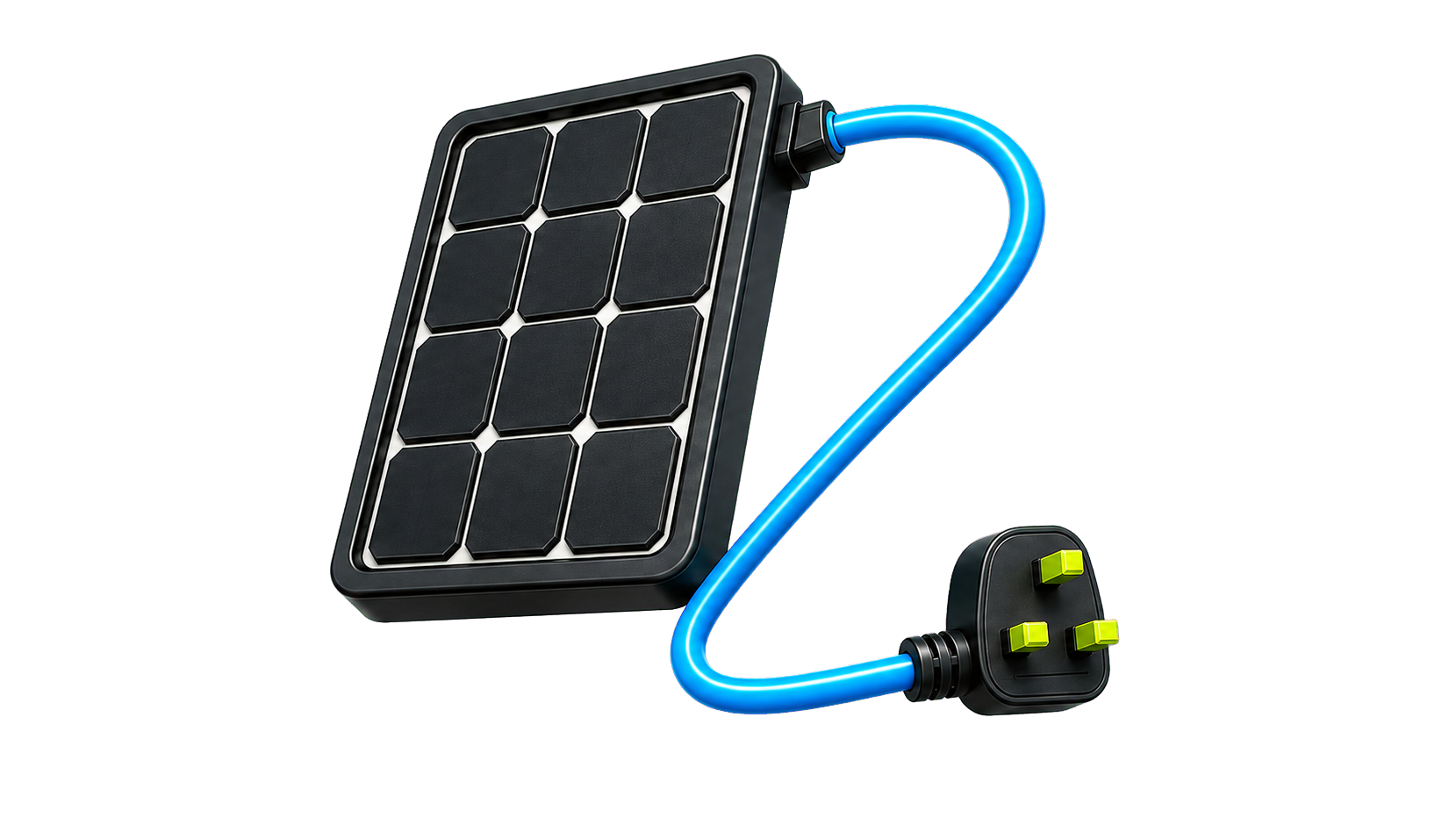
A small solar system designed to connect to a normal household socket through the specific Great Britain route. Panels make DC electricity and a microinverter converts it to AC for the home.
Is it the same as a portable power station?
No. A portable power station stores energy in a battery and powers connected devices. Battery-integrated generation is outside the initial qualifying plug-in-solar route.
Will it work during a power cut?
Normally no. Grid-connected inverters are designed to stop energising the network when the mains supply fails. Never assume emergency backup unless a separate approved system expressly provides it.
Can it make my meter run backwards?
A correctly configured modern meter records imports and, where supported, exports. If you think a meter is behaving incorrectly, contact your electricity supplier; do not interfere with it.
Rules and products
When does the Great Britain rule change happen?
The 2026 amendment comes into force on 27 August 2026. Before then, do not treat an imported plug-in kit as automatically lawful to connect.
What is the power limit?
The qualifying plug-in microgenerator must have rated AC output of no more than 800 watts. Panel DC wattage is a different figure; the government response retains a 2,000W DC-module cap for the complete product.
Does the route cover Northern Ireland?
Not fully. The Great Britain network/electrical route applies to England, Scotland and Wales. Government analysis says separate Northern Ireland electricity-law changes would also be required.
Can the kit include a battery?
Not under the initial narrow route. A battery or portable generator needs its own applicable connection and safety approach.
Is CE or UKCA marking enough?
No. It may be relevant to general product conformity, but buyers should also obtain the exact whole-kit declaration, confirm the ENA record and follow the final plug-in-solar specification.
Can I combine parts from different brands?
Do not assume so. The government response says products should be supplied as complete kits, with the business placing the whole product on the market responsible for compliance.
How do I check the ENA register?
Search the G98 Type Test Register for the exact manufacturer and generating-unit model. Check model numbers character by character; a family name or similar record is not enough.
Sockets, circuits and notification
Can I use any socket?
No. Use only the socket/circuit type and connection method stated in the final instructions. The instructions should explain circuit protection and when to seek an electrician.
Can I use an extension lead or adapter?
Not unless the exact final product instructions expressly permit it. Added connections can introduce damage, weather and overheating risks.
Can I connect more than one kit?
Do not assume you can. The intended final rule is one device per individual final circuit; until the G98 amendment, the government says the existing one-device-per-household position continues.
Do I need an electrician?
The route is intended to allow consumer setup of a compliant kit, but that does not make every property suitable. Seek a competent electrician if the socket, circuit, protective device, cable route or condition of the installation is uncertain, or if new electrical work is needed.
Who must be told about the system?
Your DNO needs the information required by the final G98 process. That is the network company, not necessarily your electricity supplier. Follow the official consumer guidance and kit instructions in force at installation.
Renters, flats and mounting
Can renters use plug-in solar?
Potentially, but check the tenancy and obtain written permission before fixing equipment to the building, changing a cable route or using external/shared areas.
Can I put it on a balcony?
Only if the exact mounting system is intended for that balcony and you have the necessary permissions. Wind and falling-object risks are particularly important at height.
Do I need planning permission?
It depends on the property, mounting, location and local restrictions. Some solar work is permitted development, but listed buildings, conservation areas, standalone panels and prominent installations can need separate checks.
What about flats with cladding?
Do not attach or route cables through an external wall or cladding system without approval. Fire spread, waterproofing, warranties and building-management rules can make this unsuitable.
Should I tell my insurer?
Check the policy. Tell the insurer or landlord/freeholder where the terms require notification, particularly for external fixtures and alterations.
Savings and buying
How much money will I save?
There is no universal figure. Estimate annual generation, multiply by the share used at home and by the import price. Then compare a low, middle and high case with the total installed cost.
Will I be paid for exported electricity?
Do not assume it. SEG normally requires suitable half-hourly export metering and evidence such as MCS certification or an equivalent. Ask a SEG supplier whether the exact self-installed system qualifies.
Which direction is best?
South-facing positions often produce the most annual energy, but east/west generation may better match morning or evening use. Shading, angle and safe mounting can matter more than compass direction alone.
Should I buy before 27 August?
Waiting for final guidance and properly documented Great Britain products reduces uncertainty. A retailer promise to deliver later is not a substitute for seeing the final exact-kit evidence.
What records should I keep?
Keep the invoice, exact model and serial numbers, declaration, manual, ENA reference, DNO confirmation, permission letters, installation photographs and warranty information.
What if a product is recalled?
Stop using it if the safety notice instructs you to do so, follow the remedy, and contact the seller or manufacturer. Check the official UK product recalls database using the exact model.