Last checked: 4 August 2026
How the energy moves
- Panels collect sunlight. They produce direct-current (DC) electricity.
- A microinverter changes it. It converts DC into alternating current (AC) that matches the household supply.
- The approved plug connects the complete kit. Electricity enters one final circuit.
- Appliances use nearby generation. If the home needs more power, the grid supplies the difference.
What a complete kit may contain
- One or more solar modules
- A microinverter limited by the qualifying product rules
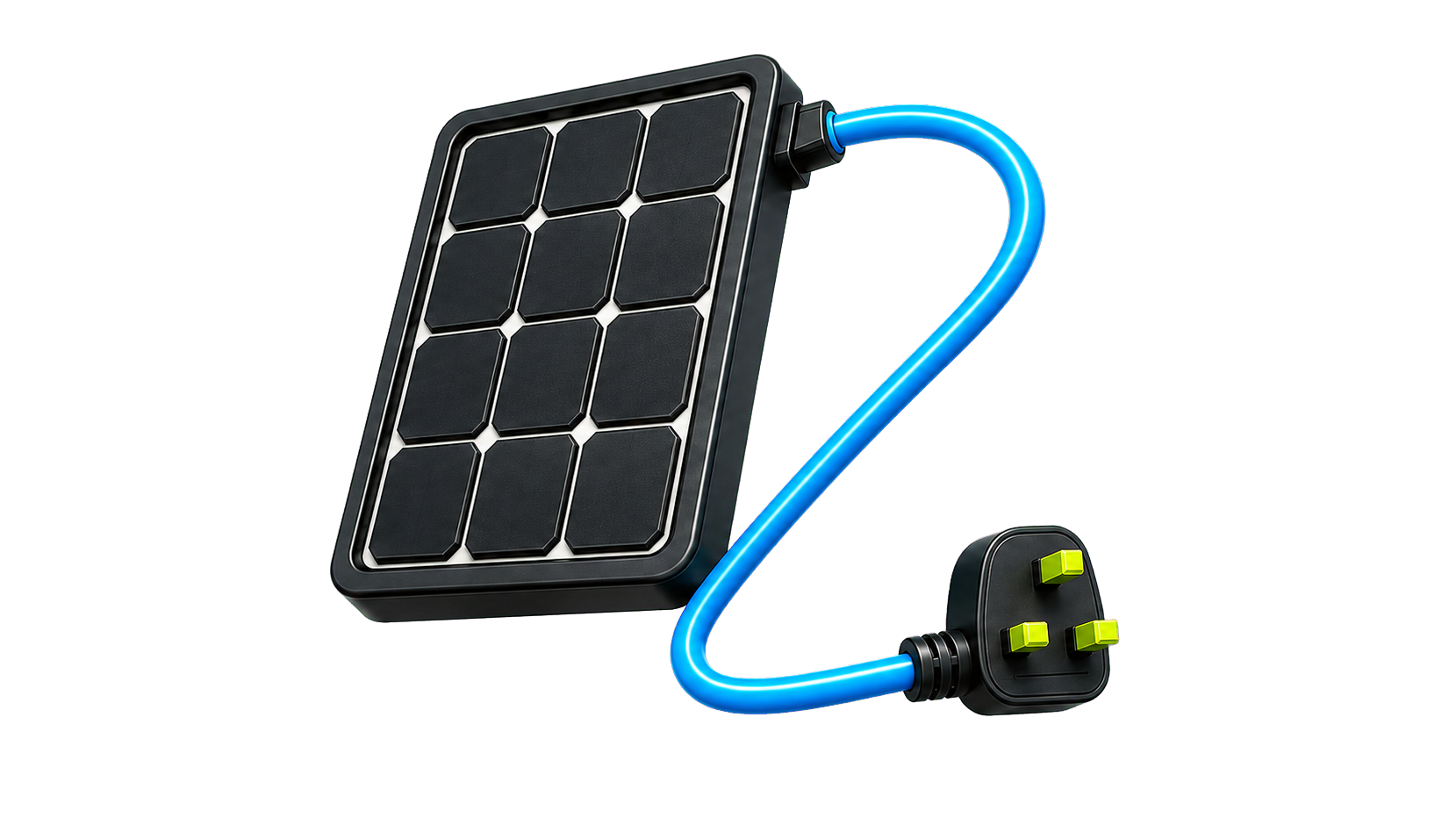
- The approved connection cable and plug
- A mounting system intended for the stated location
- Instructions, warnings and the whole-kit compliance declaration
What it is not
- A battery or portable power station
- A conventional hard-wired rooftop installation
- Permission to connect an overseas “balcony solar” product
- A way to power the home during a power cut
- A guarantee of a particular saving
Why daytime use matters
Without a battery, the simplest financial benefit comes from using solar electricity while it is being generated. A fridge, router, home office or other daytime loads may absorb some output. Unused electricity may flow to the grid, but payment is a separate question.